What's the ____________ land animal?
TCU•

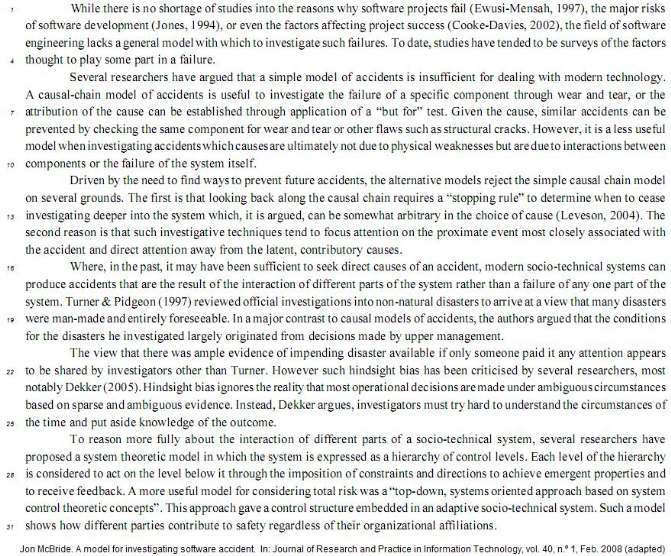
"outcome" (l.25) is closest in meaning to upshot.

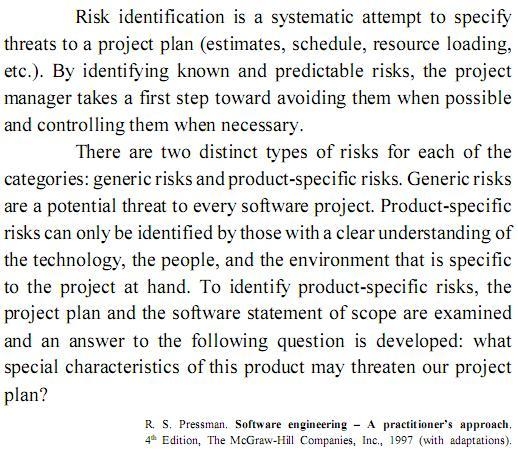
systematic identification helps to avoid foreseen risks.
NASA Researchers Studying Advanced Nuclear Rocket Technologies
January 9, 2013
By using an innovative test facility at NASA’s Marshall Space Flight Center in Huntsville, Ala., researchers are able to use non-nuclear materials to simulate nuclear thermal rocket fuels - ones capable of propelling bold new exploration missions to the Red Planet and beyond. The Nuclear Cryogenic Propulsion Stage team is tackling a three-year project to demonstrate the viability of nuclear propulsion system technologies. A nuclear rocket engine uses a nuclear reactor to heat hydrogen to very high temperatures, which expands through a nozzle to generate thrust. Nuclear rocket engines generate higher thrust and are more than twice as efficient as conventional chemical rocket engines.
The team recently used Marshall’s Nuclear Thermal Rocket Element Environmental Simulator, or NTREES, to perform realistic, non-nuclear testing of various materials for nuclear thermal rocket fuel elements. In an actual reactor, the fuel elements would contain uranium, but no radioactive materials are used during the NTREES tests. Among the fuel options are a graphite composite and a “cermet” composite - a blend of ceramics and metals. Both materials were investigated in previous NASA and U.S. Department of Energy research efforts.
Nuclear-powered rocket concepts are not new; the United States conducted studies and significant ground testing from 1955 to 1973 to determine the viability of nuclear propulsion systems, but ceased testing when plans for a crewed Mars mission were deferred.
The NTREES facility is designed to test fuel elements and materials in hot flowing hydrogen, reaching pressures up to 1,000 pounds per square inch and temperatures of nearly 5,000 degrees Fahrenheit - conditions that simulate space-based nuclear propulsion systems to provide baseline data critical to the research team.
“This is vital testing, helping us reduce risks and costs associated with advanced propulsion technologies and ensuring excellent performance and results as we progress toward further system development and testing,” said Mike Houts, project manager for nuclear systems at Marshall.
A first-generation nuclear cryogenic propulsion system could propel human explorers to Mars more efficiently than conventional spacecraft, reducing crews’ exposure to harmful space radiation and other effects of long-term space missions. It could also transport heavy cargo and science payloads. Further development and use of a first-generation nuclear system could also provide the foundation for developing extremely advanced propulsion technologies and systems in the future - ones that could take human crews even farther into the solar system.
Building on previous, successful research and using the NTREES facility, NASA can safely and thoroughly test simulated nuclear fuel elements of various sizes, providing important test data to support the design of a future Nuclear Cryogenic Propulsion Stage. A nuclear cryogenic upper stage - its liquid- hydrogen propellant chilled to super-cold temperatures for launch - would be designed to be safe during all mission phases and would not be started until the spacecraft had reached a safe orbit and was ready to begin its journey to a distant destination. Prior to startup in a safe orbit, the nuclear system would be cold, with no fission products generated from nuclear operations, and with radiation below significant levels.
“The information we gain using this test facility will permit engineers to design rugged, efficient fuel elements and nuclear propulsion systems,” said NASA researcher Bill Emrich, who manages the NTREES facility at Marshall. “It’s our hope that it will enable us to develop a reliable, cost-effective nuclear rocket engine in the not-too-distant future."
The Nuclear Cryogenic Propulsion Stage project is part of the Advanced Exploration Systems program, which is managed by NASA’s Human Exploration and Operations Mission Directorate and includes participation by the U.S. Department of Energy. The program, which focuses on crew safety and mission operations in deep space, seeks to pioneer new approaches for rapidly developing prototype systems, demonstrating key capabilities and validating operational concepts for future vehicle development and human missions beyond Earth orbit.
Marshall researchers are partnering on the project with NASA’s Glenn Research Center in Cleveland, Ohio; NASA’s Johnson Space Center in Houston; Idaho National Laboratory in Idaho Falls; Los Alamos National Laboratory in Los Alamos, N.M.; and Oak Ridge National Laboratory in Oak Ridge, Tenn.
The Marshall Center leads development of the Space Launch System for NASA. The Science & Technology Office at Marshall strives to apply advanced concepts and capabilities to the research, development and management of a broad spectrum of NASA programs, projects and activities that fall at the very intersection of science and exploration, where every discovery and achievement furthers scientific knowledge and understanding, and supports the agency’s ambitious mission to expand humanity’s reach across the solar system. The NTREES test facility is just one of numerous cutting-edge space propulsion and science research facilities housed in the state-of- the-art Propulsion Research & Development Laboratory at Marshall, contributing to development of the Space Launch System and a variety of other NASA programs and missions.
Available in: http://www.nasa.gov
“Nuclear rocket engines generate higher thrust and are more than twice as efficient as conventional chemical rocket engines.”
It is correct to affirm that the adjectives in bold and underlined are, respectively,
She lives ____ the countryside. Carlos is ____ university. The hospital is ____ the left. They arrive _____ the airport tonight.
Choose the correct alternative:
Luis Suárez joins anti-racism calls after Dani Alves banana incident
The Barcelona defender Dani Alves has sparked a social media campaign against racism in football as support flooded in from fellow professionals for his decision to eat a banana thrown at him by an opposition fan.
Luis Suárez, Neymar, Hulk, Mario Balotelli and Sergio Agüero were among those who posted pictures of themselves taking bites out of bananas in tribute to Alves actions in his side s La Liga match at Villarreal on Sunday.
The Fifa president Joseph Blatter has branded the abuse directed at Alves an "outrage" and promised zero tolerance towards discrimination at the World Cup, while Villarreal took swift action by identifying the culprit and handing him a lifetime stadium ban.
Alves response to the banana being thrown on to the pitch in front of him as he prepared to take a corner was to nonchalantly pick it up, peel it and take a bite before continuing with the game. The 30-year- old, who has been the victim of racist abuse before during his time in La Liga, said: "You need to take these situations with a dose of humour."
Players across Europe paid homage on Twitter and Instagram, including Suárez, who served an eight-match ban for racially abusing Patrice Evra.
Alves s Barça and Brazil team-mate Neymar led the way after posting a picture on Instagram of himself holding a banana, while writing "We are all monkeys". Balotelli, Milan"s former Manchester City striker, posted a picture of himself in a similar pose.
Suárez posted a picture on Twitter of himself and Liverpool team-mate Philippe Coutinho taking bites out of bananas, along with the words: "#SayNoToRacism #WeAreAllMonkeys."
(...)
Barça gave their player their "complete support and solidarity" and thanked Villarreal for their "immediate condemnation" of the incident. Villarreal later revealed they had, with the help of fans, found out who the culprit was, had withdrawn his season ticket and banned him from the El Madrigal stadium for life.
Disponível em:
ESAF•
Your answers to questions 21 to 24 must be based on the
text below entitled "A dip in the middle":
A dip in the middle
Source: The Economist (adapted)
Sep 8th 2005
Income tax has been paid in Britain for more
than two centuries. First introduced by William Pitt the
Younger to finance the war against Napoleonic France,
it is the Treasury´s biggest source of revenue, raising
30% of tax receipts. It arouses strong political emotions,
regarded as fair by some because it makes the rich pay a
bigger share of their income than the poor, but unfair by
others because it penalizes enterprise and hard work.
During the past 30 years, income tax has been
subject to sweeping changes, notably the cut in the top
rate from 98% to 40% under Margaret Thatcher between
1979 and 1988. Now another Conservative politician,
George Osborne, is floating a radical reform to match
that earlier exploit. The shadow chancellor announced
on September 7ththat he was setting up a commission
to explore the possible introduction of a flat income tax
in Britain.
Introducing a flat income tax into Britain would
involve two main changes. At present, there are three
marginal tax rates. These three rates would be replaced
by a single rate, which would be considerably lower than
the current top rate. At the same time there would be an
increase in the tax-free personal allowance, currently
worth 4,895 pounds.
The flat income tax
By Sally Kane, About.com Guide
Born in the mid-1980"s and later, Generation Y legal professionals are in their 20s and are just entering the workforce. With numbers estimated as high as 70 million, Generation Y (also -1- as the Millennials) is the fastest growing segment of today"s workforce. As law firms compete for available talent, employers cannot ignore the needs, desires and attitudes of this vast generation. Below are a few common traits that define Generation Y.
Tech-Savvy: Generation Y grew up with technology and rely on it to perform their jobs better. Armed with BlackBerrys, laptops, cellphones and other gadgets, Generation Y is plugged-in 24 hours a day, 7 days a week. This generation prefers to communicate through e-mail and text messaging rather than face-to-face contact and -2- webinars and online technology to traditional lecture-based presentations.
Family-Centric: The fast-track has lost much of its appeal for Generation Y who is willing to trade high pay for fewer billable hours, flexible schedules and a better work/life balance. While older generations may view this attitude as narcissistic or lacking commitment, discipline and drive, Generation Y legal professionals have a different vision of workplace expectations and prioritize family over work.
Achievement-Oriented: Nurtured and pampered -3- parents who did not want to make the mistakes of the previous generation, Generation Y is confident, ambitious and achievement-oriented. They have high expectations of their employers, seek out new challenges and are not afraid to question authority. Generation Y wants meaningful work and a solid learning curve
Team-Oriented: As children, Generation Y participated in team sports, play groups and other group activities. They value teamwork and seek the input and affirmation of others. Part of a no-person-left-behind generation, Generation Y is loyal, committed and wants to be included and involved.
Attention-Craving: Generation Y craves attention in the forms of feedback and guidance. They appreciate being kept in the loop and seek frequent praise and reassurance. Generation Y may benefit greatly from mentors who can help guide and develop their young careers.
Font: http://legalcareers.about.com/od/practicetips/a/Ge...
Para as questões 36 e 37, leia o texto abaixo.
Advice for new students from those who know (old students)
The first day of college I was a ball of nerves. I remember
walking into my first class and running to the first seat I
found, thinking everyone would be staring at me. But
nobody seemed to notice and then it hit me: The fact that
nobody knew me meant nobody would judge, which, upon
reflection, was what I was scared of the most. I told myself
to let go. All along the year, I forced myself into situations
that were uncomfortable for me – for example, auditioning
for a dance piece. Believe it or not, that performance was a
highlight of my freshman year. My advice: challenge
yourself to try something new, something you couldn’t have
done in high school. – Ria Jagasia, Vanderbilt University,
’18.
(Adaptado de http://www.nytimes.com/2015/08/02/ education/edlife/
advice-for-new-students-from-those-who-know-old-students.html?ref=
edlife.)
Para lidar com a situação, a estratégia adotada foi deixar de se preocupar e
January 9, 2013
By using an innovative test facility at NASA’s Marshall Space Flight Center in Huntsville, Ala., researchers are able to use non-nuclear materials to simulate nuclear thermal rocket fuels - ones capable of propelling bold new exploration missions to the Red Planet and beyond. The Nuclear Cryogenic Propulsion Stage team is tackling a three-year project to demonstrate the viability of nuclear propulsion system technologies. A nuclear rocket engine uses a nuclear reactor to heat hydrogen to very high temperatures, which expands through a nozzle to generate thrust. Nuclear rocket engines generate higher thrust and are more than twice as efficient as conventional chemical rocket engines.
The team recently used Marshall’s Nuclear Thermal Rocket Element Environmental Simulator, or NTREES, to perform realistic, non-nuclear testing of various materials for nuclear thermal rocket fuel elements. In an actual reactor, the fuel elements would contain uranium, but no radioactive materials are used during the NTREES tests. Among the fuel options are a graphite composite and a “cermet” composite - a blend of ceramics and metals. Both materials were investigated in previous NASA and U.S. Department of Energy research efforts.
Nuclear-powered rocket concepts are not new; the United States conducted studies and significant ground testing from 1955 to 1973 to determine the viability of nuclear propulsion systems, but ceased testing when plans for a crewed Mars mission were deferred.
The NTREES facility is designed to test fuel elements and materials in hot flowing hydrogen, reaching pressures up to 1,000 pounds per square inch and temperatures of nearly 5,000 degrees Fahrenheit - conditions that simulate space-based nuclear propulsion systems to provide baseline data critical to the research team.
“This is vital testing, helping us reduce risks and costs associated with advanced propulsion technologies and ensuring excellent performance and results as we progress toward further system development and testing,” said Mike Houts, project manager for nuclear systems at Marshall.
A first-generation nuclear cryogenic propulsion system could propel human explorers to Mars more efficiently than conventional spacecraft, reducing crews’ exposure to harmful space radiation and other effects of long-term space missions. It could also transport heavy cargo and science payloads. Further development and use of a first-generation nuclear system could also provide the foundation for developing extremely advanced propulsion technologies and systems in the future - ones that could take human crews even farther into the solar system.
Building on previous, successful research and using the NTREES facility, NASA can safely and thoroughly test simulated nuclear fuel elements of various sizes, providing important test data to support the design of a future Nuclear Cryogenic Propulsion Stage. A nuclear cryogenic upper stage - its liquid- hydrogen propellant chilled to super-cold temperatures for launch - would be designed to be safe during all mission phases and would not be started until the spacecraft had reached a safe orbit and was ready to begin its journey to a distant destination. Prior to startup in a safe orbit, the nuclear system would be cold, with no fission products generated from nuclear operations, and with radiation below significant levels.
“The information we gain using this test facility will permit engineers to design rugged, efficient fuel elements and nuclear propulsion systems,” said NASA researcher Bill Emrich, who manages the NTREES facility at Marshall. “It’s our hope that it will enable us to develop a reliable, cost-effective nuclear rocket engine in the not-too-distant future."
The Nuclear Cryogenic Propulsion Stage project is part of the Advanced Exploration Systems program, which is managed by NASA’s Human Exploration and Operations Mission Directorate and includes participation by the U.S. Department of Energy. The program, which focuses on crew safety and mission operations in deep space, seeks to pioneer new approaches for rapidly developing prototype systems, demonstrating key capabilities and validating operational concepts for future vehicle development and human missions beyond Earth orbit.
Marshall researchers are partnering on the project with NASA’s Glenn Research Center in Cleveland, Ohio; NASA’s Johnson Space Center in Houston; Idaho National Laboratory in Idaho Falls; Los Alamos National Laboratory in Los Alamos, N.M.; and Oak Ridge National Laboratory in Oak Ridge, Tenn.
The Marshall Center leads development of the Space Launch System for NASA. The Science & Technology Office at Marshall strives to apply advanced concepts and capabilities to the research, development and management of a broad spectrum of NASA programs, projects and activities that fall at the very intersection of science and exploration, where every discovery and achievement furthers scientific knowledge and understanding, and supports the agency’s ambitious mission to expand humanity’s reach across the solar system. The NTREES test facility is just one of numerous cutting-edge space propulsion and science research facilities housed in the state-of- the-art Propulsion Research & Development Laboratory at Marshall, contributing to development of the Space Launch System and a variety of other NASA programs and missions.
Available in: http://www.nasa.gov
“Nuclear rocket engines generate higher thrust and are more than twice as efficient as conventional chemical rocket engines.”
It is correct to affirm that the adjectives in bold and underlined are, respectively,
How can respecting human rights help the police?
Respect for human rights by law enforcement agencies actually enhances the effectiveness of those agencies. Where human rights are systematically respected, police officers have developed professionalism in their approaches to solving and preventing crime and maintaining public order. In this sense, respect for human rights by police is, in addition to being a moral, legal and ethical imperative, also a practical requirement for law enforcement. When the police are seen to respect, uphold and defend human rights:
• Public confidence is built and community cooperation fostered.
• Legal prosecutions are successful in court. • Police are seen as part of the community, performing a valuable social function.
• The fair administration of justice is served, and, consequently, confidence in the system.
• An example is set for respect for the law by others in the society.
• Police are able to be closer to the community, and, therefore, in a position to prevent and solve crimes through proactive policing.
• Support is elicited from the media, from the international community, and from higher authorities.
• A contribution is made to the peaceful resolution of conflicts and complaints.
An effective police service is one that serves as the first line of defense in the protection of human rights. Its members carry out their work in a way, which does not rely upon fear and raw power but, on the contrary, is based on regard for the law, honor, and professionalism.
What role does training play in protecting human rights?
The effective training of police in human rights is an essential element in the global efforts to promote and protect human rights in every country. In order to protect human rights, the police must first know and understand them. Furthermore, police officers must be familiar with the various international guidelines and bodies of principles – such as the Code of Conduct for law enforcement officials and the principles on the use of force and firearms – and be able to use them as tools in their everyday work. They must understand the fact that international human rights standards concerning their work were developed to provide invaluable guidance for the performance of their crucial functions in a democratic society. However, police officers in the line of duty should know not only what the rules are, but also how to do their job effectively within the confines of those rules.
Doesn’t concern for human rights hinder effective police work?
Most people have heard the argument that respect for human rights is somehow opposed to effective law enforcement. And effective law enforcement means to capture the criminal. And to secure his conviction, it is necessary to “bend the rules” a little. A tendency to use overwhelming force in controlling demonstrations, physical pressure to extract information from detainees, or excessive force to secure an arrest can be observed now and then. In this way of thinking, law enforcement is a war against crime, and human rights are merely obstacles thrown in the path of the police by lawyers and NGOs. In fact, violations of human rights ––78–––– police only make the already challenging task of law enforcement ––– 79––– . When the law enforcer ––– 80––– the lawbreaker, the result is an assault on human dignity, on the law itself and on all institutions of public authority.
(G. Kalajdziev, et al. www.humanrights.dk. Adaptado.)

Based on the text above, judge the following items.
Films on-line are certainly a profitable business for Hollywood film industry.
Our nation is embarked on an ambitious space exploration program, and we owe it to the American taxpayers to get it right.

According to EPE President, Mauricio Tomalsquim,
TCU•

flash memory has become a major database storage in building portable information devices because of its nonvolatile, shock-resistant, power-economic nature, and fast access time for read operations.