Based on the text above, judge the following items.
In the text,
“parents” ( .21) refers to mother and father.
In the text,
“parents” (
.21) refers to mother and father.Selecione os filtros para encontrar suas questões de concursos e clique no botão abaixo para filtrar e resolver.
Nada por aqui
.21) refers to mother and father.PART 1: READING COMPREHENSION
Based on the text below, answer questions 21, 22 and 23.
Orqanizinq Intelliqence for Counterinsurgency
EFFECTIVE, ACCURATE, AND TIMELY intelligence is essential to conducting any form of warfare, including counterinsurgency operations, because the ultimate success or failure of the mission depends on the effectiveness of the intelligence effort. The function of intelligence in counterinsurgency is to facilitate an understanding of the populace, the host nation, the operational environment, and the insurgents so that commanders may address the issues driving the insurgency. Insurgencies, however, are notoriously difficult to evaluate. The organization of the standard military intelligence system, developed for major theater warfare rather than counterinsurgency, compounds the difficulty. Intelligence systems and personnel must adapt to the challenges of a counterinsurgency environment to provide commanders the intelligence they require. This is a "best practice" in counterinsurgency, without which counterinsurgency efforts will likely fail.
(September-October 2006. MILITARY REVIEW p.24)
. "(...) counterinsurgency efforts will likely fail". What does the word "likely" mean in this sentence of the text?
Choose the option that correctly completes the sentence:
As they _________ down the street they _________ Amelia.
From the passage as a whole we infer that
Intellectual Property
Industrial property legislation is part of the wider body of law known as intellectual property. Intellectual property relates to items of information or knowledge, which can be incorporated in tangible objects at the same time in an unlimited number of copies at different locations anywhere in the world. The property is not in those copies but in the information or knowledge reflected in them. Intellectual property rights are also characterized by certain limitations, such as limited duration in the case of copyright and patents.
The importance of protecting intellectual property was first recognized in the Paris Convention for the Protection of Industrial Property in 1883 and the Berne Convention for the Protection of Literary and Artistic Works in 1886. Both treaties are administered by the World Intellectual Property Organization (WIPO).
Countries generally have laws to protect intellectual property for two main reasons. One is to give statutory expression to the moral and economic rights of creators in their creations and to the rights of the public in accessing those creations. The second is to promote creativity and the dissemination and application of its results, and to encourage fair trade, which would contribute to economic and social development.
Intellectual property is usually divided into two branches, namely industrial property and copyright.
Copyright relates to artistic creations, such as poems, novels, music, paintings, and cinematographic works. The expression copyright refers to the main act which, in respect of literary and artistic creations, may be made only by the author or with his authorization.
The broad application of the term "industrial" is clearly set out in the Paris Convention for the Protection of Industrial Property (Article 1 (3)): "Industrial property shall be understood in the broadest sense and shall apply not only to industry and commerce proper, but likewise to agricultural and extractive industries and to all manufactured or natural products, for example, wines, grain, tobacco leaf, fruit, cattle, minerals, mineral waters, beer, flowers, and flour."
Industrial property takes a range of forms. These include patents to protect inventions; and industrial designs, which are aesthetic creations determining the appearance of industrial products. Industrial property also covers trademarks, service marks, layout-designs of integrated circuits, commercial names and designations, as well as geographical indications, and protection against unfair competition. In some of these, the aspect of intellectual creation, although existent, is less clearly defined. What counts here is that the object of industrial property typically consists of signs transmitting information, in particular to consumers, as regards products and services offered on the market. Protection is directed against unauthorized use of such signs likely to mislead consumers, and against misleading practices in general.
Understanding Industrial Property. World Intellectual Property Organization – WIPO,
p. 3-5. In: Internet: (adapted).
According to the text above, judge the following items.
Protection granted by industrial property rights is exclusive to those products in which the aspects of intellectual creation are explicit.
Qual é a alternativa correta para colocar a frase "Jerry ate the chease"?
The IRS Chief Counsel is appointed by the President of the United States, with the advice and consent of the U.S. Senate, and serves as the chief legal advisor to the IRS Commissioner on all matters pertaining to the interpretation, administration, and enforcement of the Internal Revenue Code, as well as all other legal matters. Under the IRS Restructuring and Reform Act of 1998, the Chief Counsel reports to both the IRS Commissioner and the Treasury General Counsel.
Attorneys in the Chief Counsel’s Offce serve as lawyers for the IRS. They provide the IRS and taxpayers with guidance on interpreting Federal tax laws correctly, represent the IRS in litigation, and provide all other legal support required to carry out the IRS mission.
Chief Counsel received 95,929 cases and closed 94,323 cases during fscal year 2012. Of the new cases received, and cases closed, the majority related to tax law enforcement and litigation, including Tax Court litigation; collection, bankruptcy, and summons advice and litigation; Appellate Court litigation; criminal tax; and enforcement advice and assistance.
In Fiscal Year 2012, Chief Counsel received 31,295 Tax Court cases involving taxpayers contesting an IRS determination that they owed additional tax. The total amount of tax and penalty in dispute at the end of the fscal year was almost $6.6 billion.
(Source: Internal Revenue Service Data Book, 2012.)
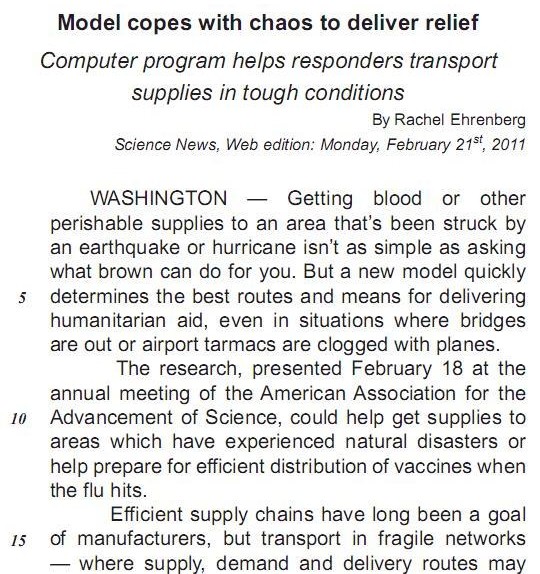
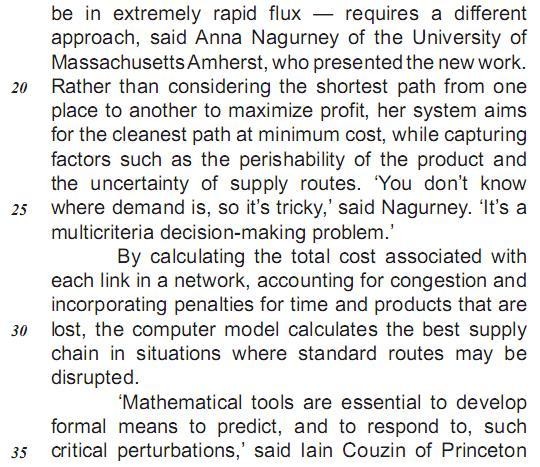
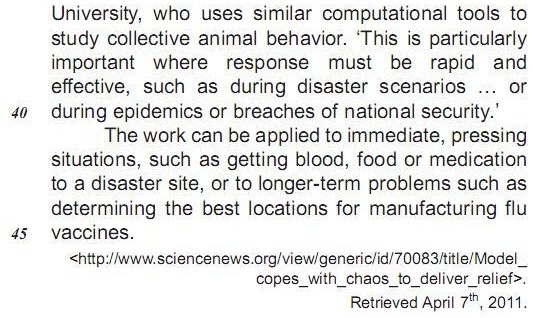
Iain Couzin is mentioned in paragraph 5 (lines 33-40) because he
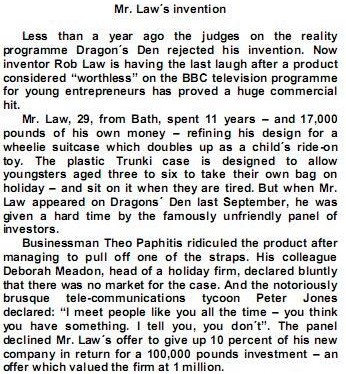
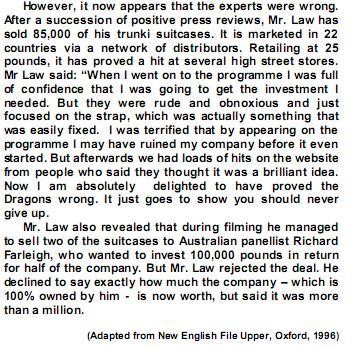
What Rob was initially looking for was?
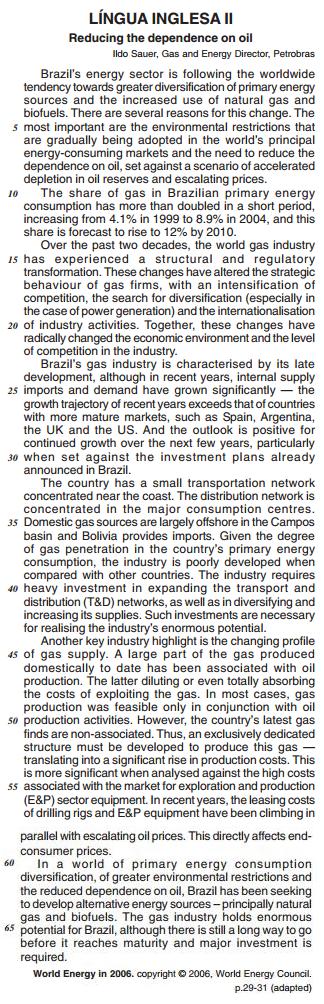
According to the author, the world gas industry, since the late 80s, has:
According to the text, the
Read the text below and choose the alternative that fills in correctly and respectively the blanks.
Treatment & Managing Reactions
Currently, the only way to prevent a food–allergic reaction is to ___________ the problem food. Once you have been diagnosed _________ a food allergy, talk to your doctor ___________ how allergic reactions should be treated. Have your doctor created a written "Food Allergy Action Plan"__________ that you and ___________ will know what to do in the event of a reaction? Mild to moderate symptoms (e.g., itching, sneezing, hives and rashes) are _____________ treated with antihistamines and oral or topical steroids. For patients at risk ____________ experiencing a severe reaction (anaphylaxis), epinephrine is prescribed. Epinephrine is the _____________ medication that can reverse the symptoms of anaphylaxis. It is available in an auto–injector (Auvi–Q?, EpiPen® or Adrenaclick®). If prescribed, use Epinephrine at the first sign of an allergic reaction and call 911. Request an ambulance and tell the dispatchers that you have just used Epinephrine for a suspected food–induced anaphylactic reaction. Patients should always go to the emergency room for further treatment, _____________ if symptoms appear to resolve after Epinephrine is administered.
Treatment & Managing Reactions. Available in: http://www.foodallergy.org
Check the only item in which the phrasal verb in bold type has the same meaning as the verb in italics.