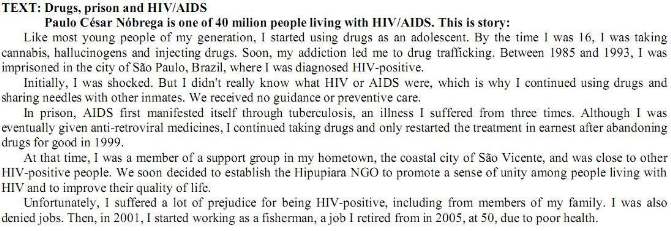

Addiction/ better/itself/among. The following words can be classified as:
Selecione os filtros para encontrar suas questões de concursos e clique no botão abaixo para filtrar e resolver.
Nada por aqui
Addiction/ better/itself/among. The following words can be classified as:

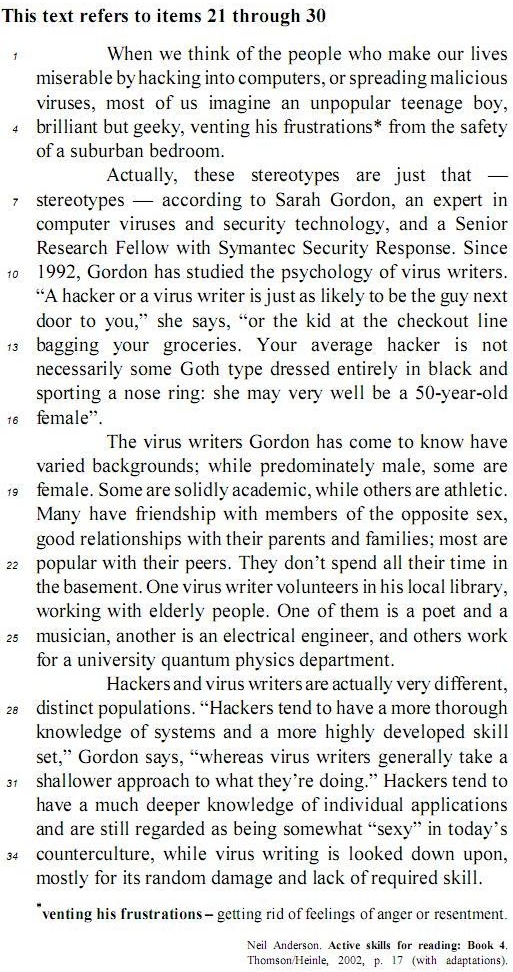
Brazil must legalise drugs – its existing policy just destroys lives
For decades, guns and imprisonment have been the hallmarks of Brazil’s war against the drug trafficking. But the only way to beat the gangs is to stop creating criminals, says a top Brazilian judge
“The war raging in Rocinha, Latin America’s largest favela, has already been lost. Rooted in a dispute between gangs for control of drug trafficking, it has disrupted the daily life of the community in Rio de Janeiro since mid-September. With the sound of shots coming from all sides, schools and shops are constantly forced to close. Recently, a stray bullet killed a Spanish tourist. The war is not the only thing being lost.
For decades, Brazil has had the same drug policy approach. Police, weapons and numerous arrests. It does not take an expert to conclude the obvious: the strategy has failed. Drug trafficking and consumption have only increased. […]
In a case still before the Brazilian supreme court, I voted for decriminalising the possession of marijuana for private consumption. […]
Drugs are an issue that has a profound impact on the criminal justice system, and it is legitimate for the supreme court to participate in the public debate. So here are the reasons for my views.
First, drugs are bad and it is therefore the role of the state and society to discourage consumption, treat dependents and repress trafficking. The rationale behind legalisation is rooted in the belief that it will help in achieving these goals.
Second, the war on drugs has failed. Since the 1970s, under the influence and leadership of the US, the world has tackled this problem with the use of police forces, armies, and armaments. The tragic reality is that 40 years, billions of dollars, hundreds of thousands of prisoners and thousands of deaths later, things are worse. At least in countries like Brazil.
Third, as the American economist Milton Friedman argued, the only result of criminalisation is ensuring the trafficker’s monopoly.
With these points in mind, what would legalisation achieve?
In most countries in North America and Europe, the greatest concern of the authorities is users and the impact drugs have on their lives and on society. These are all important considerations. In Brazil, however, the principal focus must be ending the dominance drug dealers exercise over poor communities. Gangs have become the main political and economic power in thousands of modest neighbourhoods in Brazil. This scenario prevents a family of honest and hard-working people from educating their children away from the influence of criminal factions, who intimidate, co-opt and exercise an unfair advantage over any lawful activity. Crucially, this power of trafficking comes from illegality.
Another benefit of legalisation would be to prevent the mass incarceration of impoverished young people with no criminal record who are arrested for trafficking because they are caught in possession of negligible amounts of marijuana. A third of detainees in Brazil are imprisoned for drug trafficking. Once arrested, young prisoners will have to join one of the factions that control the penitentiaries – and on that day, they become dangerous.
[…]
We cannot be certain that a progressive and cautious policy of decriminalisation and legalisation will be successful. What we can affirm is that the existing policy of criminalisation has failed. We must take chances; otherwise, we risk simply accepting a terrible situation. As the Brazilian navigator Amyr Klink said: “The worst shipwreck is not setting off at all.”
Disponível em:<https://www.theguardian.com/global-development/2017/nov/15/brazil-must-legalise-drugs-existing-policy-destroys-lives-luis-roberto-barroso-supreme-court-judge>
Leia o texto a seguir para responder à questão.
Artificial intelligence and the future of medicine
Brazil must legalise drugs – its existing policy just destroys lives
For decades, guns and imprisonment have been the hallmarks of Brazil’s war against the drug trafficking. But the only way to beat the gangs is to stop creating criminals, says a top Brazilian judge
“The war raging in Rocinha, Latin America’s largest favela, has already been lost. Rooted in a dispute between gangs for control of drug trafficking, it has disrupted the daily life of the community in Rio de Janeiro since mid-September. With the sound of shots coming from all sides, schools and shops are constantly forced to close. Recently, a stray bullet killed a Spanish tourist. The war is not the only thing being lost.
For decades, Brazil has had the same drug policy approach. Police, weapons and numerous arrests. It does not take an expert to conclude the obvious: the strategy has failed. Drug trafficking and consumption have only increased. […]
In a case still before the Brazilian supreme court, I voted for decriminalising the possession of marijuana for private consumption. […]
Drugs are an issue that has a profound impact on the criminal justice system, and it is legitimate for the supreme court to participate in the public debate. So here are the reasons for my views.
First, drugs are bad and it is therefore the role of the state and society to discourage consumption, treat dependents and repress trafficking. The rationale behind legalisation is rooted in the belief that it will help in achieving these goals.
Second, the war on drugs has failed. Since the 1970s, under the influence and leadership of the US, the world has tackled this problem with the use of police forces, armies, and armaments. The tragic reality is that 40 years, billions of dollars, hundreds of thousands of prisoners and thousands of deaths later, things are worse. At least in countries like Brazil.
Third, as the American economist Milton Friedman argued, the only result of criminalisation is ensuring the trafficker’s monopoly.
With these points in mind, what would legalisation achieve?
In most countries in North America and Europe, the greatest concern of the authorities is users and the impact drugs have on their lives and on society. These are all important considerations. In Brazil, however, the principal focus must be ending the dominance drug dealers exercise over poor communities. Gangs have become the main political and economic power in thousands of modest neighbourhoods in Brazil. This scenario prevents a family of honest and hard-working people from educating their children away from the influence of criminal factions, who intimidate, co-opt and exercise an unfair advantage over any lawful activity. Crucially, this power of trafficking comes from illegality.
Another benefit of legalisation would be to prevent the mass incarceration of impoverished young people with no criminal record who are arrested for trafficking because they are caught in possession of negligible amounts of marijuana. A third of detainees in Brazil are imprisoned for drug trafficking. Once arrested, young prisoners will have to join one of the factions that control the penitentiaries – and on that day, they become dangerous.
[…]
We cannot be certain that a progressive and cautious policy of decriminalisation and legalisation will be successful. What we can affirm is that the existing policy of criminalisation has failed. We must take chances; otherwise, we risk simply accepting a terrible situation. As the Brazilian navigator Amyr Klink said: “The worst shipwreck is not setting off at all.”
Disponível em:<https://www.theguardian.com/global-development/2017/nov/15/brazil-must-legalise-drugs-existing-policy-destroys-lives-luis-roberto-barroso-supreme-court-judge>
TEXTO
Brazil has declared an end to its public health emergency over the Zika virus, 18 months after a surge in cases drew headlines around the world.
The mosquito-borne virus was not considered a major health threat until the 2015 outbreak revealed that Zika can lead to severe birth defects. One of those defects, microcephaly, causes babies to be born with skulls much smaller than expected.
Photos of babies with the defect spread panic around the globe as the virus was reported in dozens of countries. Many would-be travellers cancelled their trips to Zika-infected places. The concern spread even more widely when health officials said it could also be transmitted through sexual contact with an infected person.
The health scare came just as Brazil, the epicentre of the outbreak, was preparing to host the 2016 Olympics, fuelling concerns the Games could help spread the virus. One athlete, a Spanish wind surfer, said she got Zika while training in Brazil ahead ofthe Games.
In response to the outbreak, Brazil launched a mosquito-eradication campaign. The health ministry said those efforts have helped to dramatically reduce cases of Zika. Between January and mid-April, 95% fewer cases were recorded than during the same period last year. The incidence of microcephaly has fallen as well.
The World Health Organization (WHO) lifted its own international emergency in November, even while saying the virus remained a threat.
“The end of the emergency doesn’t mean the end of surveillance or assistance” to affected families, said Adeilson Cavalcante, the secretary for health surveillance at Brazil’s health ministry. “The health ministry and other organisations involved in this area will maintain a policy of fighting Zika, dengue and chikungunya.”
All three diseases are carried by the Aedes aegypti mosquito.
But the WHO has warned that Zika is “here to stay,” even when cases of it fall off, and that fighting the disease will be an ongoing battle.
(Fonte: Associated Press, Friday 12 May 2017 10.18 BST. Last modified on Friday 12 May 2017 22.00 BST)
I was launched by the Brazilian Government;
ll was launched by WHO;
lll helped to reduce the incidence of microcephaly;
lV helped to save the lives of five athletes;
V helped to reduce cases of Zika.
Regarding the sentence
“It’s no wonder that you don’t support their ideas; after all, their lack of knowledge is utterly conspicuous”
it is CORRECT to affirm that: